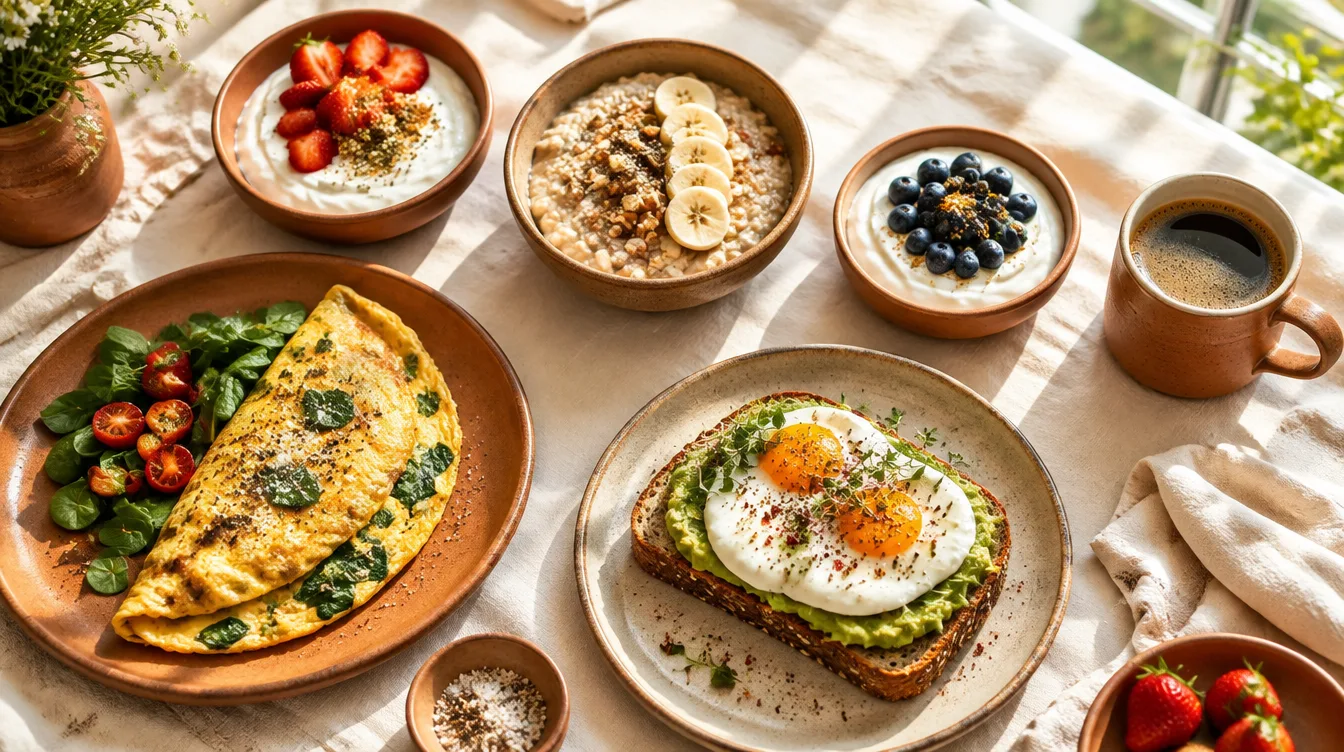
- Five breakfasts you can make in 10 minutes or less, with 21 to 34 g of protein per serving.
- Protein keeps you full for longer, so you crave sweet snacks less by mid-morning.
- Everyday supermarket ingredients are all you need: eggs, quark, yogurt, oats, bread.
- Values are approximate and depend on the brand of ingredients and exact portions.
For many people, breakfast is the weakest point of the day. Either there is no time for it, or it ends up as a sweet pastry that leaves your stomach rumbling an hour later. But a high-protein breakfast doesn't have to mean standing at the stove. Each of the five recipes below takes just a few minutes and gives you a solid dose of protein. If you are wondering how much protein you actually need, see our guide to losing weight sustainably.
These recipes are general inspiration, not individual dietary advice. If you have a medical condition or an allergy, or you are pregnant or breastfeeding, talk to your doctor or a registered dietitian. Values are approximate.
1. Spinach and cheese omelet (about 505 kcal)
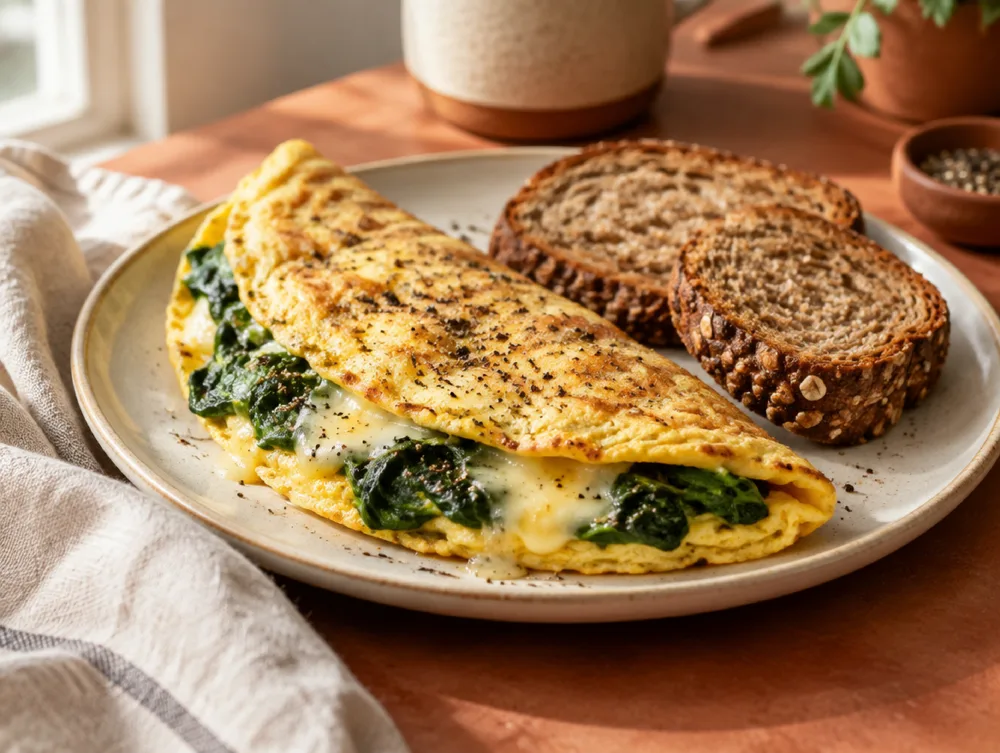
1 serving · 10 minutes
- 3 medium eggs (about 165 g)
- 50 g spinach
- 20 g Edam cheese (30% fat in dry matter)
- 2 slices of whole-grain bread (70 g total)
- 1 teaspoon oil (5 g), salt, pepper
- Whisk the eggs with a pinch of salt and pepper.
- Heat the oil in a pan, add the spinach and let it wilt for 1 minute.
- Pour in the eggs, sprinkle with the cheese and cook over medium heat until the top sets (about 3 minutes).
- Fold it in half and serve with the bread.
Per serving: about 505 kcal · 34 g protein · 32 g carbs · 26 g fat
This is the highest-calorie breakfast of the five. For a lighter version, use 2 eggs and add 100 g of tomatoes or bell pepper.
2. Quark with fruit and nuts (about 315 kcal)
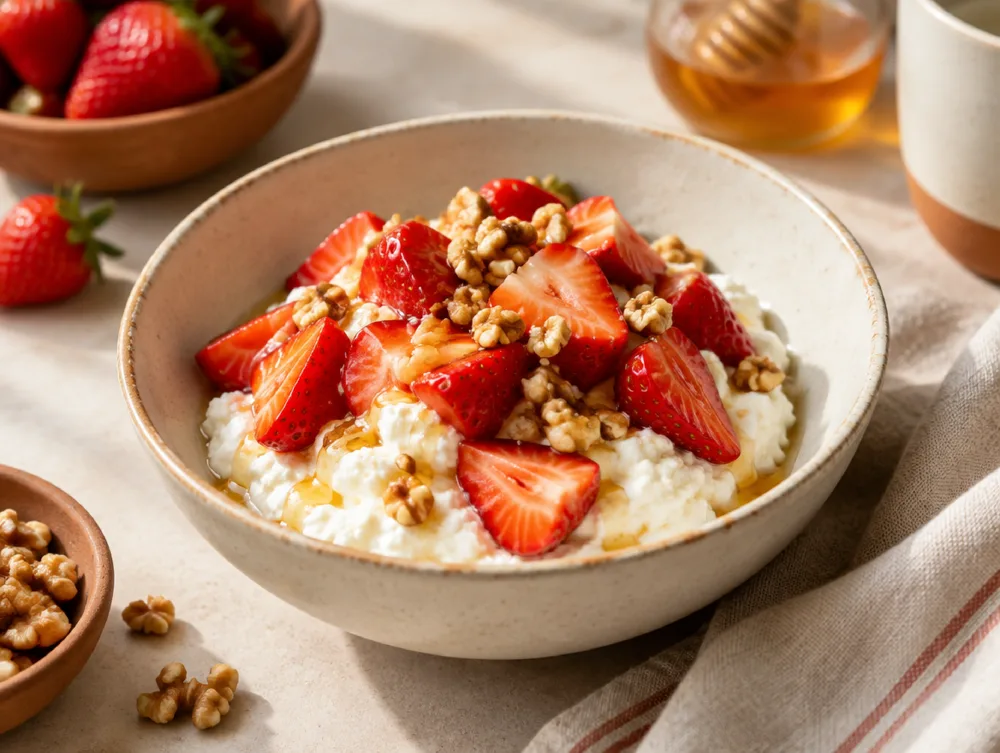
1 serving · 3 minutes
- 200 g semi-skimmed soft quark
- 100 g strawberries (fresh or frozen)
- 10 g walnuts
- 1 teaspoon honey (about 7 g)
- Put the quark in a bowl and mash it with a fork until creamy.
- Slice the strawberries and place them on top, then roughly crush the walnuts over them.
- Drizzle with the honey.
Per serving: about 315 kcal · 26 g protein · 21 g carbs · 13 g fat
It is also the quickest breakfast of the five. Measure the nuts and honey, because it is easy to pour in more than you think.
3. Oatmeal with quark and banana (about 405 kcal)
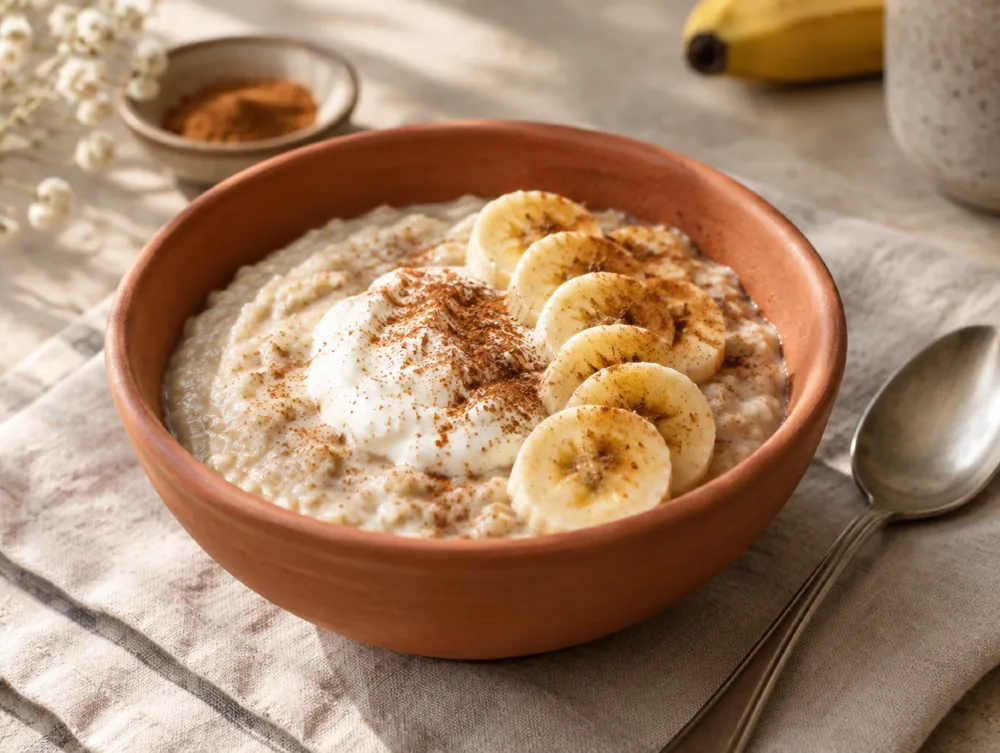
1 serving · 8 minutes
- 50 g rolled oats
- 150 ml milk (1.5% fat)
- 100 g semi-skimmed quark
- 60 g banana (roughly half a small one)
- a pinch of cinnamon
- Pour the milk over the oats and cook for 3 to 4 minutes, stirring occasionally.
- Take it off the heat and let it stand for 1 minute.
- Stir in the quark and cinnamon and top with sliced banana.
Per serving: about 405 kcal · 24 g protein · 55 g carbs · 9 g fat
Add the quark only after cooking so it doesn't curdle and the oatmeal stays creamy. In summer you can skip the cooking: leave the oats and milk in the fridge overnight.
Caloora is free to start. Log breakfast with a photo of your plate, a barcode scan or plain words. For meals you eat regularly, add them with one tap using "Eat again".
Try Caloora for free4. Avocado toast with eggs (about 420 kcal)
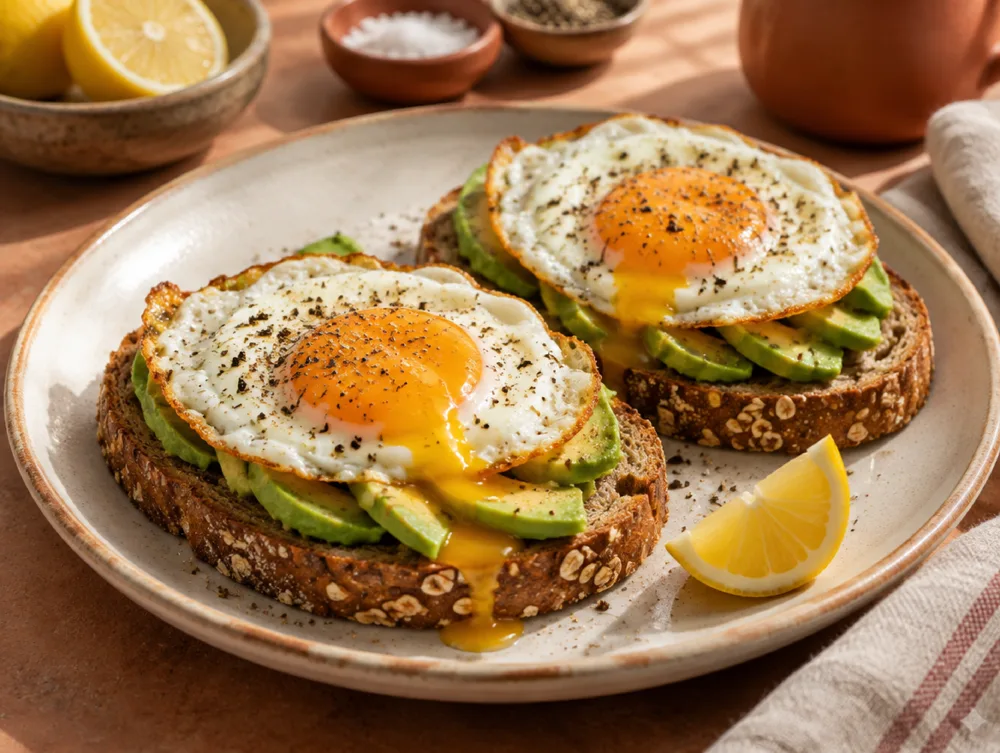
1 serving · 10 minutes
- 2 slices of whole-grain bread (70 g total)
- 60 g avocado (roughly half a small fruit, peeled and pitted)
- 2 eggs (about 110 g)
- a pinch of salt, pepper, a squeeze of lemon
- Boil the eggs hard or soft (6 to 9 minutes).
- Toast the bread.
- Mash the avocado with a fork, lemon and salt, and spread it on the toast.
- Top with sliced eggs and season with pepper.
Per serving: about 420 kcal · 21 g protein · 35 g carbs · 22 g fat
Avocado is full of healthy fats, but also full of calories. That is why it is worth weighing, at least the first few times.
5. Greek yogurt with oats and blueberries (about 385 kcal)

1 serving · 3 minutes
- 200 g Greek yogurt (about 2 to 3% fat)
- 30 g rolled oats
- 80 g blueberries (frozen is fine)
- 15 g almonds or other nuts
- Put the yogurt in a bowl.
- Add the oats, fruit and chopped almonds.
- Stir. If you have a minute to spare, let the bowl sit for 5 minutes so the oats soften.
Per serving: about 385 kcal · 24 g protein · 39 g carbs · 15 g fat
Watch out for "Greek-style" yogurts with a high fat content. Some have over 10% fat, and the same bowl can add a hundred extra calories. Check the label.
All five breakfasts at a glance
| Breakfast | Time | Kcal | Protein |
|---|---|---|---|
| Spinach and cheese omelet | 10 min | about 505 | 34 g |
| Quark with fruit and nuts | 3 min | about 315 | 26 g |
| Oatmeal with quark | 8 min | about 405 | 24 g |
| Avocado toast with eggs | 10 min | about 420 | 21 g |
| Greek yogurt with oats | 3 min | about 385 | 24 g |
- Prepare at least one thing the night before (boiled eggs, sliced fruit, pre-weighed portions of nuts).
- Include protein in every breakfast. It keeps you full and helps maintain muscle.
- If you eat breakfast late or skip it, read our guide to intermittent fasting. It isn't for everyone.
Lunch and dinner can be just as simple. Check out five quick healthy lunches under 600 kcal that pair well with these breakfasts. If the values for your ingredients don't match what you have at home, you will find them in the calorie database.
Frequently asked questions
How much protein should I have at breakfast?
The exact number depends on your weight, goal and health. As a rough guide, about 20 to 30 g per meal is often mentioned. Your doctor or a registered dietitian can give you a figure that fits you.
Can I eat these breakfasts every day?
Yes, but variety is better. Different ingredients give you different vitamins and minerals, and you won't get bored so quickly. You can easily rotate the recipes through the week.
What if I don't eat eggs or dairy?
You can also get protein from tofu, legumes, plant-based yogurts and protein powder. With plant-based alternatives, check the label, as values vary a lot between brands.
Will a high-protein breakfast help me lose weight?
It can help by keeping you full, which makes eating less easier. But what counts is your total calorie intake over the day and long-term consistency. There is no miracle food.
The information on this page is general and educational. It does not replace advice from a doctor, dietitian or trainer. If you have a health condition, take medication, or are pregnant or breastfeeding, talk to a professional before changing your diet or exercise.